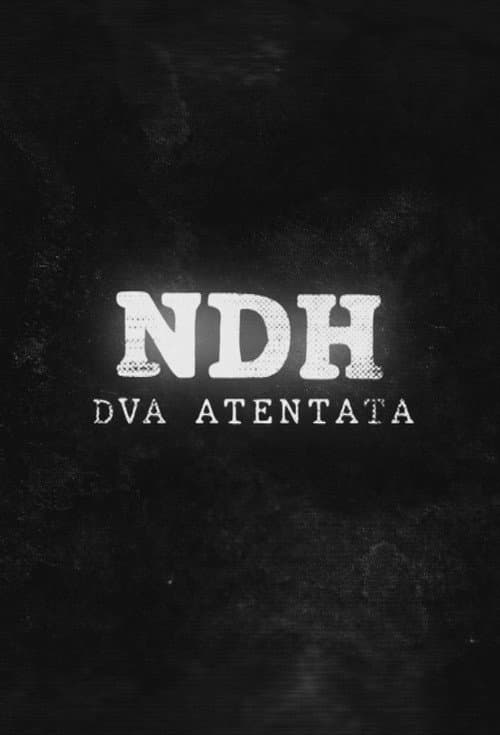
A 12-episode documentary series about the Independent State of Croatia.
Two Assassinations
On 20 June 1928, Puniša Račić, a representative of the People's Radical Party in the parliament in the Kingdom of Serbs, Croats and Slovene, assassinated the representatives of the Croatian Peasant Party (HSS). The assassination led to political turmoil, eventually leading to the formation of the Croatian nationalist terrorist organization which in 1932 became known as the Ustashe...
New Europe
In 1938, Nazi Germany annexes Austria and occupies Czechoslovakia. After 1 September 1939 and the invasion of Poland, creation of an empire becomes part of the war aim. This New Europe would be dominated by Nazi Germany and Fascist Italy. The Ustashe also see a place for themselves in this New Europe. See how these ideas determines the way in which the Ustashe will rule the Independent State of Croatia (NDH)…
10 April
On 25 March 1941, the Kingdom of Yugoslavia joins the Tripartite Pact. Two days later, protests break out in Belgrade, and the military command executes a coup d’etat. Adolf Hitler decides that the Kingdom of Yugoslavia is to be destroyed. On 10 April 1941, the German Army enters Zagreb, and Slavko Kvaternik declares the Independent State of Croatia.
Ustasha State
In April 1941, the leader of the Croatian Peasant Party Vladko Maček refused Germany’s offer to proclaim a Croatian puppet state. However, the offer was accepted by the Ustashe. On 10 April, Slavko Kvaternik, leader of the Ustashe in Croatia, proclaimed the Independent State of Croatia. What was the composition of this new Ustashe state?
Foreign Policy
Little over a month after the creation of the NDH, the new state suffers a significant blow when negotiating the first international agreement. The Treaties of Rome effectively ceded most of the Adriatic coast to Italy. It was only the first of many foreign policy concessions that the NDH had to make. The theme of this episode is who recognized the NDH and what kind of foreign policy did it pursue.
Croatia to the Drina
The newly formed state was divided into an Italian and a German interest zone. Hungary also annexed the territories of Međimurje and Baranja. The NDH ceded the majority of the Adriatic coast to Italy, along with all the islands, with the exception of Pag. The territory of the NDH was divided into 22 great parishes. Due to the Ustashe terror and the rise of the partisan movement, the internal stability of the state kept worsening.
Militia
After the proclamation of the Independent State of Croatia (NDH), a few hundred ustashas, who were gathered and armed by the Italian government, came to this new state. They formed the core of the Ustashe Militia. Apart from the Militia, the Army of the NDH was founded.
Nature and Culture
In the NDH, the Ustashe movement had all the power, determining what the state was going to be like in terms of economics and culture. Modeling itself after Nazi Germany, the economy was based on the seizure of property, primarily that of Jews and Serbs, while the culture needed to be produced without the undesired Serbs, Jews, or those Croats who were against the regime.
The Church
The first government of the NDH swore its oath on 16 April 1941 in the present of Vilim Cecelia, a Roman Catholic parish priest, Ismet Muftić, the mufti of Zagreb, and Michael Backer, an evangelical vicar. This speaks to the importance that the Ustashe gave to religious communities, of whom the most important was the Catholic Church. What was the attitude of the Catholic Church towards totalitarian regimes and the NDH?
The Undesirables
The Ustashe conceived the NDH as a state exclusively for the Croatian people. The only minority that was in good standing in the NDH were the Germans, while Muslims were considered part of the Croatian ethnic community. In the first few months of the state’s existence, it passed a series of racial laws. It founded a system of camps to be used for mass killings of Serbs, Jews, Roma, and anti-regime Croats. How did this murderous policy come to be?
Terror
During the summer of 1932, the Ustashe began their terrorist acts, which included civilian victims. In 1934, along with the Macedonian revolution organization VMRO they organized the assassination on King Aleksandar I, which also killed the French Foreign Minister. After the formation of the NDH, the Ustashe began a terror campaign in the state that they founded.
Epilogue
Despite the German surrender on 9 May 1945, the Ustashe regime had no intention to surrender. It continued its fight against the Yugoslav Army, the armed force of Democratic Federal Yugoslavia, which was recognized by the Allied Powers. The remainder of the Ustashe Army surrendered by Bleiburg in Austria on 15 May 1945.
Hrvoje Klasić
Self
The World at War
1973
Srebrenica - 25 jaar later
2020
Brug, De
1990
The Real Dad's Army
2006
The Diary of Anne Frank
2009
Popielec
1984
Soviet Storm: WW2 in the East
2010
Inside the SS
2017
Living with Hitler
2021
Libération(s), dans la joie et la douleur
2024
WWII: The Lost Color Archives
2000
The Dirty Dozen
1988
Great Blunders of WWII
The Blitz: Britain on Fire
2019
1941-1945 At The Heart of The War In The Pacific
2015
Trains At War
World War II: From the Frontlines
2023
The Gestapo: Hitler's Secret Police
2004
A Pide Leninha
F19 - Flygaress och dubbelspioner